


The Federal Government has unveiled a multi-pronged strategy to tackle food contamination, adulteration and unsafe food processing practices in Nigeria, following reports linking these practices to an estimated 50 million foodborne illnesses and 53,000 deaths in the country.
The Minister of Innovation, Science and Technology, Dr Kingsley Tochukwu Udeh, disclosed this in Abuja, announcing plans to strengthen the enforcement of food safety laws and collaborate with the Ministry of Justice and the Office of the Attorney-General to ensure that offenders are prosecuted.
According to the Minister, individuals and businesses involved in the production and sale of contaminated or adulterated food products risk imprisonment of between six months and two years upon conviction.
The Minister described the scale of foodborne diseases as alarming, citing a World Health Organization (WHO) report which estimated that 866 million people globally suffered foodborne illnesses in 2021, resulting in 1.52 million deaths, including 143,000 children under five. The report also estimated the global economic burden of foodborne diseases at $310 billion.
He recalled two tragic incidents in Nigeria: the deaths of five members of a family in Kogi State in August 2026 following the consumption of fufu processed from cassava flour, and 49 fatalities in Ondo State in September following the consumption of locally prepared alcoholic and herbal drinks contaminated with methanol.


These incidents, he noted, underscore the urgent need for stronger food safety regulations, effective monitoring and increased public awareness.
The Minister also commended the Registrar of the Nigerian Council of Food Science and Technology (NiCFoST), Mrs Veronica Ezeh, for her efforts towards addressing the circulation of unwholesome and adulterated food products in the country.
Earlier, Mrs Ezeh had raised concerns over several dangerous food processing and preservation practices exposing Nigerians to serious health risks. These include the use of calcium carbide for artificial fruit ripening, application of dichlorvos (popularly known as Sniper) on beans and grains, use of paracetamol to tenderize meat, and the application of detergents and bleaching agents during cassava processing.
She also identified the adulteration of palm oil with prohibited colourants, including Sudan IV dye, as another serious food safety concern.
To address these challenges, the Registrar outlined several measures, including strict enforcement of Sections 243–245 of the Criminal Code Act, Cap C38, Laws of the Federation of Nigeria 2004.
Other proposed interventions include the establishment of a Food Science and Technology Professional Cadre within the public service at federal, state and local government levels, promotion of improved food safety technologies, and the introduction of appropriate sealing and packaging requirements for food products.
The Council also plans to organize a stakeholders’ conference, strengthen collaboration with relevant regulatory agencies and promote the adoption of its Food Safety Procedure Manual, launched in 2025.
Mrs Ezeh further emphasised the importance of deploying qualified Food Science and Technology professionals across the three tiers of government to strengthen food safety surveillance, improve regulatory compliance and prevent the circulation of contaminated and adulterated food products.
She reiterated the Council’s commitment to ensuring that more than 3,000 Food Science and Technology graduates produced annually in Nigeria are given opportunities within government institutions to contribute meaningfully to national food safety management.

NIFST Leadership at the Event
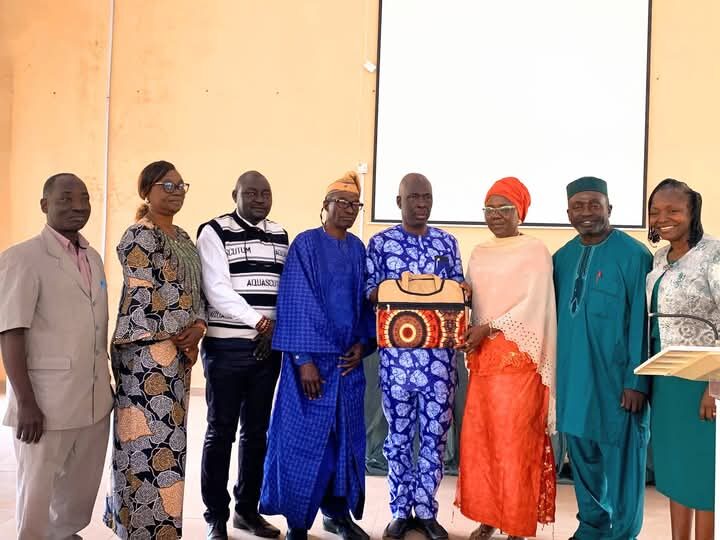
The event was attended by the President of the Nigerian Institute of Food Science and Technology (NIFST), Chief Ignatius C. Alaka, Ph.D., Vice President 1, Sirajo Funtua M., Vice President 2, Prof. Olayinka Ramota Karim, the National Secretary, Mr. Rasaq Oke, the Immediate Past President, Prince (Dr.) Bola Osinowo, the Registrar of the Nigerian Council of Food Science and Technology (NiCFoST), Mrs. Veronica Eze, and the FCT chapter Chairman, Dr. Shakirat Ajenifujah-Solebo
Their presence underscored the engagement of professional leadership in discussions and efforts aimed at strengthening food safety regulation and governance in Nigeria.
Strengthening Food Safety Through Professional Engagement
The federal government’s renewed commitment to tackling food fraud and unsafe food practices highlights the urgent need for a stronger and more coordinated national food safety system.
The development also reinforces the importance of qualified Food Science and Technology professionals in food safety regulation, quality assurance, food processing, research, surveillance and public health protection.
The Nigerian Institute of Food Science and Technology (NIFST) recognises the critical role of professional expertise, effective regulation, public enlightenment and stakeholder collaboration in ensuring that food produced, processed, distributed and consumed in Nigeria is safe and wholesome.
As the country intensifies efforts to address food safety challenges, sustained collaboration among government institutions, regulatory agencies, professional bodies, academia and industry stakeholders remains essential to protecting public health and strengthening confidence in Nigeria’s food system.
Source: Vanguard News, November 11, 2026. [Read the original]


0 Comments